
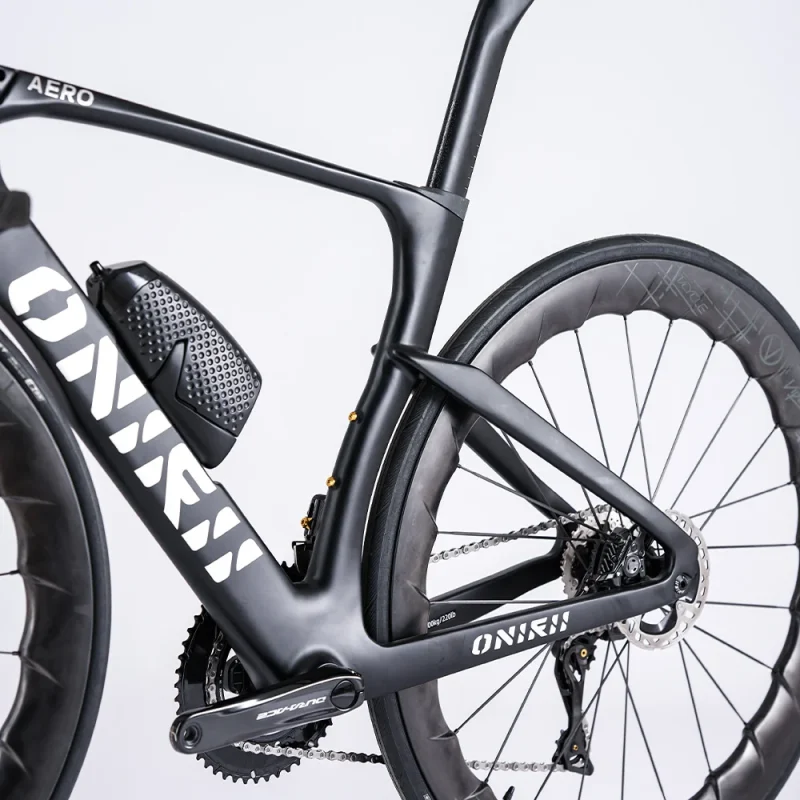
You know I don’t throw praise around lightly. After completing the Bicinglé du Ventoux, climbing Mont Ventoux six times in a single day, and racing ultras across the Alps, Pyrenees and Dolomites, I have spent enough time on expensive bikes to know the difference between genuine engineering and marketing fluff. So when people in online cycling communities started buzzing about a relatively unknown Chinese brand called Onirii and their Onirii carbon road bike lineup, I paid attention. Ready to write my own Onirii carbon road bike review.
This is not a paid review. Nobody from Onirii sent me a sample. What you are going to read is an honest deep-dive into the brand, their three carbon road bikes, their standout accessories, and what real cyclists around the world are saying about them online.
What Is Onirii? Getting to Know This Chinese Cycling Brand
Onirii is based in Chengdu, the capital of Sichuan Province in southwest China. If you follow the Chinese cycling scene at all, you know that Sichuan is rapidly becoming a hotbed for boutique cycling brands. Chengdu sits close to spectacular cycling terrain, including Erlang Mountain and Gongga Mountain, so it is not entirely surprising that passionate cyclists there are building bikes they actually want to ride.
The brand name hints at ‘oneiric’, relating to dreams, and their tagline leans into that aspirational positioning. They sell direct-to-consumer internationally through their website (oniriibike.com) and through selected channels on AliExpress. Their catalogue covers carbon road bikes, integrated handlebars, saddles (including 3D printed options), pedals, wheels, brakes and even their own CNC-machined cassettes. For a brand most Western cyclists have never heard of, that is a surprisingly complete ecosystem.
Contact is handled through service@oniriibike.com and sale@oniriibike.com. Communication in English is reportedly solid. An important practical point when you are ordering a €1,000+ frame from the other side of the world.
The Onirii Carbon Road Bike Range: Three Very Different Machines
At the heart of the Onirii offer are three carbon road frames: the Aero Pro, the One Pro, and the Flash. Each is positioned differently, and understanding those differences matters a lot before you hand over your money.
Onirii Aero Pro — Full Aero, Maximum Speed
The Aero Pro is Onirii’s flagship and their most ambitious Onirii carbon road bike. It is built from a combination of T800 and T1000 carbon fibre, the same grade used by many high-end European brands, and comes in at 980 grams for a size Medium frame. That puts it in the same weight neighbourhood as many well-known aero road frames.
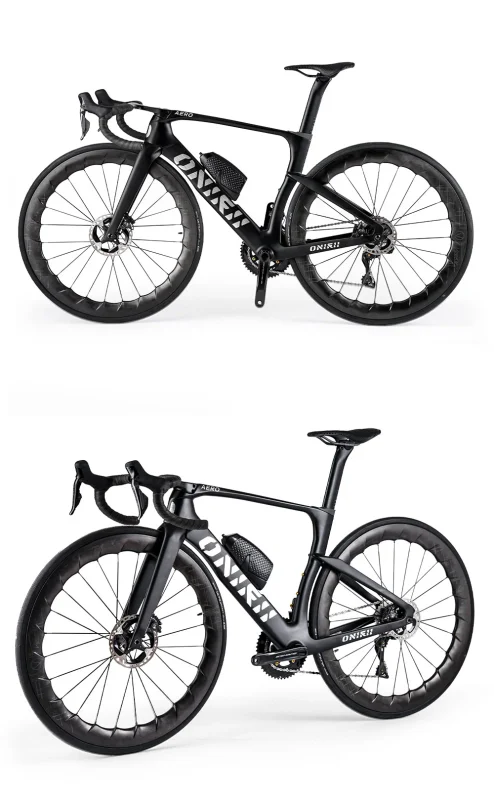
Pricing sits at $1,459 for the frame and fork alone, or from $3,299 for a complete build.
Technical specifications:
- Carbon grade: T800 + T1000
- Frame weight: 980g (size M)
- Bottom bracket: BB86 (press-fit)
- Max tyre clearance: 30c
- Cable routing: Fully internal
- Warranty: 5 years
The five-year warranty is genuinely impressive for any brand, let alone a direct-from-China option. Aerodynamically, the Aero Pro goes all-in with integrated cable management, truncated airfoil tube profiles, and proprietary brake integration around the front fork. In theory it looks the part. In practice, some implementation choices have raised eyebrows, as you will see in the reviews section.
Custom paint highlight: The Aero Pro offers 5 standard colours + 6 special editions. Gradient spray paint is included free. Extra colours cost ~$70 each. Virtually no other Asian cycling brand matches this at this price point.
I ride a Pinarello Dogma F with a Myway custom paint job, so I appreciate the value of a bike that looks distinctly yours. The ability to spec a genuinely personalised paint finish on a $1,459 frame is almost unheard of in this price bracket. European brands charge two to three times the frame price for comparable custom options. Asian cycling brands almost never offer them at all. Onirii does, and that deserves recognition.
Onirii Flash — The Pure Climber
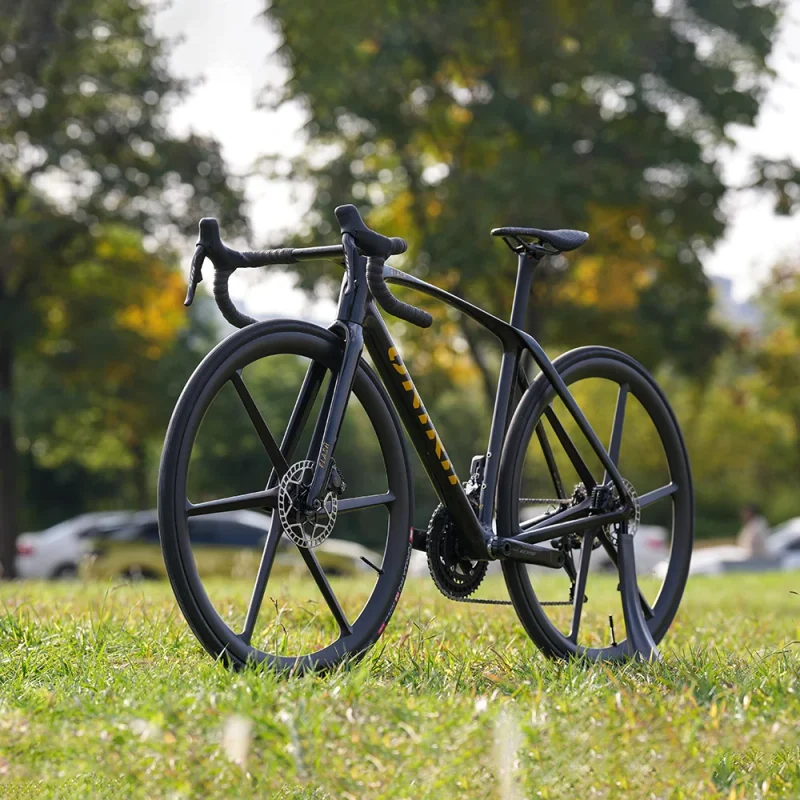
If the Aero Pro is built for speed on flat roads, the Flash is Onirii’s answer to the climbers who want every gram eliminated. The Flash weighs just 798 grams for a size Medium, 182 grams lighter than the Aero Pro, and the geometry is said to be inspired by the Look 795 Blade RS, one of the most revered climbers’ frames in the peloton.
Technical specifications:
- Carbon grade: T800 + T1000
- Frame weight: 798g (size M)
- Bottom bracket: BSA (threaded)
- Cable routing: Fully internal
- Available sizes: 47, 49, 51, 53, 55, 57, 59cm
- Frame price: $1,459
• Warranty: 5 years
The BSA threaded bottom bracket shell is a deliberate and welcomed choice. Threaded BBs are more reliable over time, easier to service anywhere in the world, and far less prone to the creaking issues that plague press-fit systems. Having done training camps in the Italian Dolomites where a creaking BB in the mountains is genuinely maddening, this matters to me personally. The size run from 47 to 59cm is also wider than many competitors, accommodating both smaller and larger riders without compromise.
Onirii One Pro — The All-Rounder Entry Point
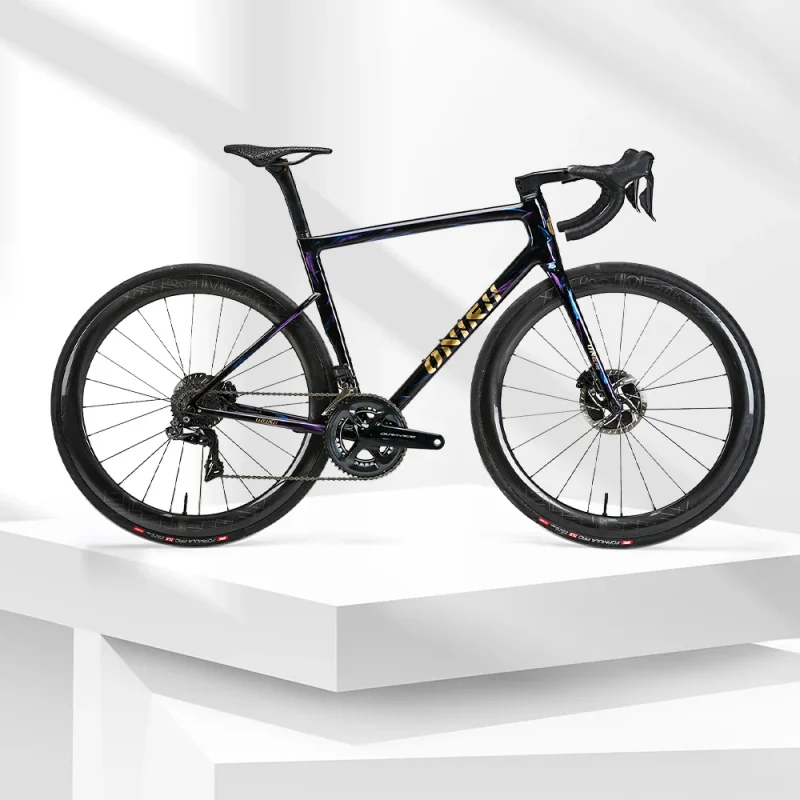
The One Pro is Onirii’s most accessible Onirii carbon road bike. Currently priced at $1,095 (reduced from $1,642), it uses a T700 and T800 carbon mix. A step down from the T1000 used in the flagship models, but still a respectable material choice for an endurance road frame.
Technical specifications:
• Carbon grade: T700 + T800
• Frame weight: 850g (size M)
• Bottom bracket: BSA (threaded)
• Paint options: 4 standard colours
• Warranty: 5 years
There is speculation in the cycling community that the One Pro may be an OEM design. Potentially sharing DNA with frames like the R088 that appear under various brand names. I cannot confirm this, but it is worth mentioning for full transparency. The ride reports are still positive, but those who want a fully proprietary design may prefer the Aero Pro or Flash.
What Real Cyclists Say: Forum Reviews and Community Feedback
Rather than just presenting Onirii’s own marketing, I spent time combing through cycling forums and community discussions to find what actual owners are reporting. The community at Chinertown.com, one of the most active hubs for Chinese cycling brand discussion among Western cyclists, has been particularly valuable here.
Onirii One Pro — Blueberry’s Build Thread
One of the most detailed Onirii builds documented online comes from a forum member known as ‘Blueberry’ who built up an Onirii One Pro and shared the experience in detail.
The highlights:
- Actual frame weight came in at 775 grams — lighter than the claimed 850g spec
- Ride quality described positively: smooth on tarmac, composed in corners
- Builder achieved a local KOM on a regular segment after switching to the Onirii
The less positive observations:
- Stem dimensions mislabelled by approximately 10mm — annoying for a planned build
- Internal cable routing not perfectly executed — some fiddle required
- Sticker logos rather than painted graphics — a cosmetic shortcut noticeable up close
- Minor cosmetic imperfections in the paint under close inspection
The overall verdict was still positive. The frame itself , the thing that matters mostn rode well and delivered real-world performance. The QC issues were annoying but not dealbreakers.
Aero Pro Community Feedback
The Aero Pro has attracted more mixed feedback. Experienced cyclists have questioned whether the aero features are genuinely optimised or primarily visual. Specific criticisms included a very small headtube that requires a significant stack of spacers to achieve normal rider positioning. This somewhat defeats the aero purpose. And questions about the stiffness-to-weight ratio. At $1,459 frame-only, some in the community felt alternatives offered better pure performance value. That said, the Aero Pro received consistent praise for its visual impact and for the custom paint programme.
Flash — The Community Favourite
Among the Onirii range, the Flash appears to generate the most genuine enthusiasm in community discussions. The Look 795-inspired geometry is considered a positive influence, and the 798g weight claim has largely been verified by owners who have weighed their frames. Several owners have built Flash frames with Ultegra groupsets at competitive prices, bringing complete build costs to well under €2,500 for a legitimate performance climbing machine.
The Accessories: Where Onirii Gets Genuinely Interesting
Carbon frames are one thing. Where Onirii really surprises is in the depth of their accessories catalogue. Several products here are genuinely original, and a couple qualify as proper eye-catchers.
ONIRII RH ONE Integrated Carbon Raised Handlebar
This is one of the most interesting handlebar designs I have come across at this price point. The RH ONE is a fully integrated carbon cockpit, bars and stem in one piece, but with a raised design that works for cyclists who need a higher stack than typical aero bars provide.
• Weight: 315 grams
• Width options: 360mm, 380mm, 400mm
• Stem length: 90 to 130mm
• Standard: OD1 universal (fits standard 1-1/8″ steerer)
• Includes: Integrated computer mount
• Price: ~$450 SGD (approx. €310)
OD1 universal compatibility means this fits almost any road bike with a standard steerer. For riders who want the clean integrated look without sacrificing stack height, which describes a lot of cyclists who spend hours in the saddle, this is a genuinely compelling option. Integrated cockpits at this price from European brands typically run twice this amount.
3D Printed Saddles
Onirii offers multiple 3D printed saddle options, putting them in elite company. Most brands offering 3D printed saddles are at the very top of the market: Fizik, Specialized and a handful of others charge €300+ for comparable products.
Onirii 3D Saddle (4-partition hollow design): $165 · 185g · 143×260mm · T800 carbon rails
Onirii TT 3D Printed Saddle: $209 · designed for time trial and triathlon positioning
Onirii ATOM Ultralight Saddle: $169 · 95 grams · for the truly weight-obsessed
The 3D printed saddles in particular are worth attention. The lattice structure allows for optimised pressure relief in a way that traditional foam and padding simply cannot match. At $165, the Onirii 4-partition saddle costs a fraction of what Fizik charges for their Adaptive range.
CNC 12-Speed Road Cassette — $158
Onirii has also entered the drivetrain market with their own CNC-machined 12-speed road cassette. CNC cassettes are a growing category, brands like Garbaruk and Absolute Black have built strong reputations here, and having your own cassette in the range is an unusual move for a relatively young brand. The specification on paper is promising.
DWC-WAVE Carbon Wheels 700C — $749
The DWC-WAVE carbon wheelset completes the picture. At under €700 for carbon wheels with a serious aerodynamic profile, they sit in a price bracket that has become increasingly competitive from Chinese brands. Without personal test data I would recommend seeking out owner reviews before committing, but the price-to-spec ratio looks attractive.
Custom Paint of your Onirii carbon road bike: A Real Differentiator in the Asian Cycling Market
I want to come back to custom paint because it deserves more attention than it typically gets in reviews of Chinese cycling brands.
If you have ever tried to get a custom colour scheme on a bike from an Asian brand, you will know the answer is almost always no or an unreasonably expensive yes. The business model for most Chinese cycling brands is volume and standardisation. Custom anything disrupts that. Onirii has taken a different approach, at least on the Aero Pro.
Five standard options + six special editions. Gradient spray included at no extra cost. Additional colours at ~$70 each. This is genuinely accessible custom paint — almost unique in the Asian cycling brand market.
Having ridden my Pinarello through the Pyrenees and through multiple training camps, I know the value of arriving at the top of a mountain on a bike that looks exactly the way you want it to. For riders considering their first Chinese carbon frame, this is also a significant confidence point: a brand willing to engage with custom paint is a brand paying attention to customer relationships and long-term reputation. That tends to be a positive signal about their overall approach to quality and service.
How Does Onirii Compare to the Chinese Carbon Market?
I have written about the broader landscape of Chinese carbon road bikes before on VeloFanatics. Within that landscape, Onirii positions itself as a mid-to-premium direct-to-consumer brand. They are not the cheapest option — at $1,095 to $1,459 for a frame, you can find lighter or simpler frames for less elsewhere. What Onirii offers that many cheaper options do not is a coherent brand identity, a deeper accessories catalogue, the custom paint programme, and, apparently, responsive English-language customer service.
Who Should Consider an Onirii Carbon Road Bike?
The Flash
For climbers and riders who prioritise weight above all else. At 798 grams and with Look 795 geometry influence, it is the most focused product in the range. If you ride in mountainous terrain, or dream of doing training camps in the Dolomites, this is the one to investigate most seriously.
The Aero Pro
For riders who want maximum visual impact and a genuine aero road bike, and who value the custom paint programme. Be aware of the headtube stack limitation and go in with realistic expectations. The aero features are real; the execution has room to improve.
The One Pro
At its current reduced price of $1,095, a good entry point to the brand. Especially for riders who want an all-rounder without the expense of the flagship models. The suspected OEM heritage is a question mark but not necessarily a dealbreaker.
Practical Considerations Before You Buy
• Shipping and import duties: In Belgium, factor in 21% VAT plus applicable customs rates on top of the purchase price.
• Warranty claims: A five-year warranty is only as good as the brand’s willingness to honour it. Onirii’s communication reputation is positive, but assess the risk honestly.
• Sizing: Request full geometry charts before ordering. Listed dimensions do not always match exactly, as the Blueberry build thread demonstrated.
• Patience: Lead times from Chinese brands can vary. Build your timeline accordingly, especially if planning around a specific event.
Final Verdict
Onirii is a brand worth knowing about. They are not perfect, the QC inconsistencies documented in forum reports are real, and some of the aero implementation on the Aero Pro feels more aspirational than executed, but there is genuine engineering ambition here, backed up by thoughtful product decisions.
The Flash is arguably the standout of the range: a genuine lightweight climber at a price that undercuts European equivalents by a significant margin, with a geometry that actually makes sense. The custom paint programme across the Aero Pro range is something no comparable Asian brand is doing at this price point. The accessories, particularly the 3D printed saddles and the RH ONE integrated handlebar, show a brand thinking beyond just the frame market.
I will be watching Onirii’s development closely. The cycling world needs more brands willing to combine genuine engineering with honest pricing and accessible customisation. Based on what I have found, Onirii is making a credible attempt at exactly that.
You can find their full range at oniriibike.com.
Frequently Asked Questions About Onirii Carbon Road Bikes
Q: Is Onirii a reputable Chinese cycling brand?
Onirii is a legitimate brand based in Chengdu, China, with a growing international customer base. Forum reports and build threads from real owners show generally positive experiences with ride quality, though some minor QC inconsistencies have been noted, typical for direct-to-consumer Chinese cycling brands in this price bracket. Their five-year frame warranty and English-language customer service are positive indicators of brand reliability.
Q: Which Onirii carbon road bike is best for climbing?
The Onirii Flash is the clear choice for climbing. At 798 grams for a size Medium frame and with geometry inspired by the Look 795 Blade RS, it is Onirii’s lightest and most climbing-focused model. The BSA threaded bottom bracket is also a practical advantage for long mountain rides where a creaking press-fit BB would be genuinely miserable.
Q: Does Onirii offer custom paint on their bikes?
Yes, and this is one of Onirii’s most distinctive features. On the Aero Pro, they offer five standard colours plus six special edition schemes. Gradient spray paint is included at no additional cost. Extra colours can be added for approximately $70 each. Custom paint at this level of accessibility is extremely rare among Asian cycling brands.
Q: How does Onirii compare to other Chinese carbon road bike brands?
Onirii sits in the mid-to-premium tier of the Chinese carbon market. They are more expensive than generic AliExpress frames but offer a coherent brand identity, a broader accessories ecosystem (including 3D printed saddles, integrated handlebars and CNC cassettes), custom paint options, and responsive customer service. For riders wanting more confidence than a fully anonymous purchase, Onirii is a meaningful step up.
Q: Are Onirii 3D printed saddles worth buying?
The Onirii 3D printed saddles represent compelling value compared to European alternatives. Their entry-level 4-partition 3D saddle at $165 with T800 carbon rails is significantly cheaper than comparable 3D printed saddles from brands like Fizik or Specialized, which typically cost €250–€350. Early owner reports are positive, though long-term durability is still being established by the community.
Want to explore more Chinese cycling brands before committing? Read my overview of the best Chinese carbon road bikes for 2026 at velofanatics.com/best-chinese-carbon-road-bikes-2026 for a broader comparison.
